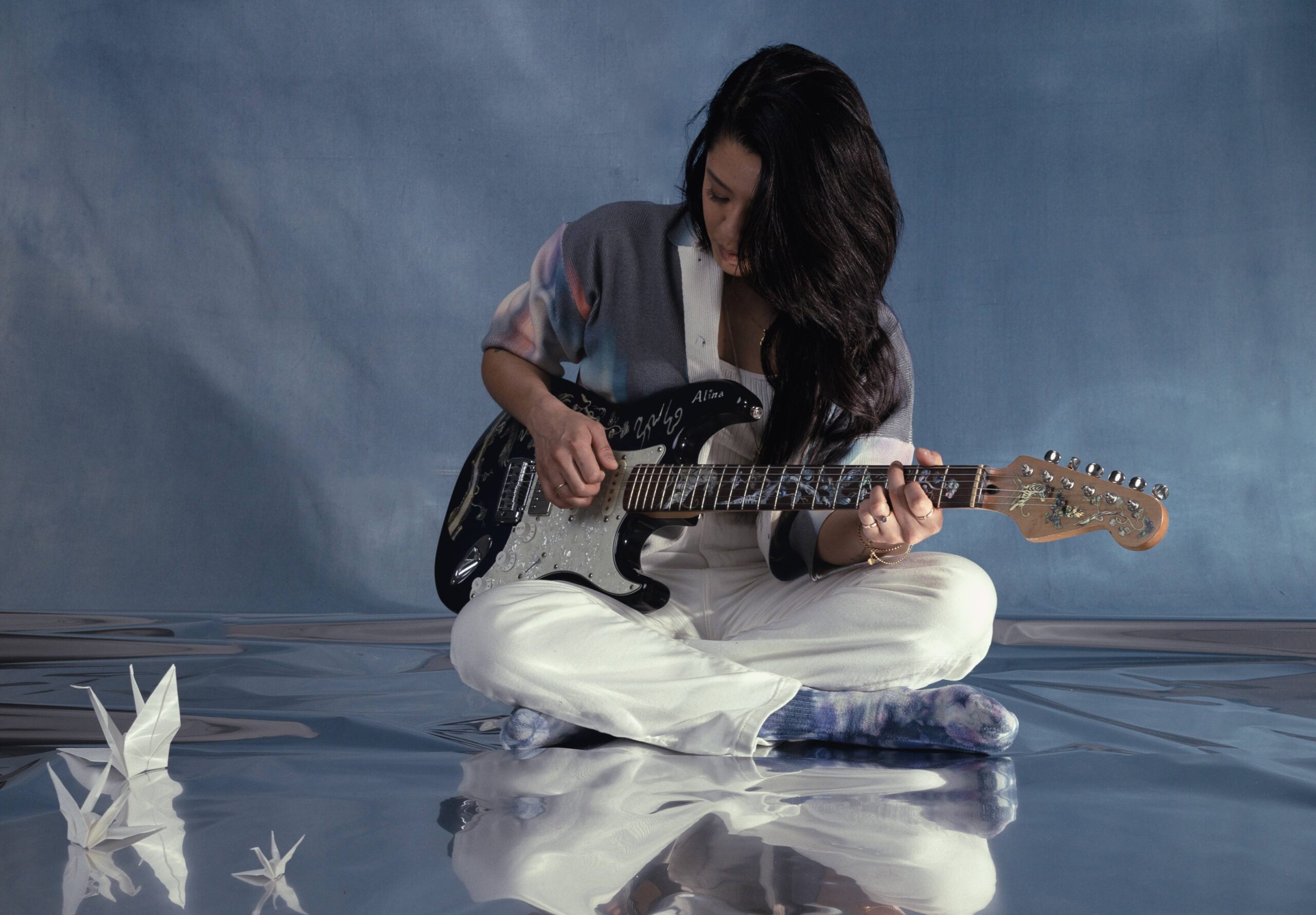
Alina Ly’s debut album Shoebox begins in a place not often spoke about: the quiet aftermath of disappearing from creativity as a whole. After more than a decade of writing and performing, she walked away from the industry cycles of releasing music, choosing solitude instead to calibrate. This was a space for her to unlearn what had been ingrained, dismantle industry habits, and find her voice again.
Ly has already released singles “Shoebox” and “Landmines”, but what began the trajectory of Shoebox the record was “The Way of My Lover”. The track emerged early in Ly’s hiatus, recorded in one take with a pair of microphones set up in the hallway outside her home studio. The recording holds breath, texture, and imperfections unique to the recording – vulnerable in every way. Ly describes it as the first song that reflected a new kind of truth. A portrait of heartbreak without spectacle, shaped by the slow realisation that loving someone does not guarantee that person remains intact. The track would later become the anchor of Shoebox, the emotional point from which every other song seems to radiate outward.
The album carries that energy of release. A gradual letting go of stories that have lingered for too long. Ly speaks about the work like someone sorting through objects collected across ten years of life. She refers to Shoebox as both archive and surrender. These songs represent lessons, failures, tenderness, and the unfamiliar relief that follows healing. Listening feels like reading a diary that was never written to be published, yet somehow is all the more powerful now that it is shared.
Musically, the record unfolds with a sense of spaciousness. Ly leans into atmospheric production and vocals that hover between vulnerability and resolve. The songs are intimate without feeling fragile, emotional without leaning into melodrama. There is a cinematic quality at play, even when the instrumentation remains minimal, as if the music is built to hold memory in a way the mind alone cannot.
Shoebox forms the first part of a three-chapter project, followed by Eden and Shoebox Vol. 2. That structure hints at forward momentum, and the work feels like a map of an artist learning to narrate her own evolution in real time.
The metaphor of the shoebox reflects the reality of a creator who spent years holding onto work she could not yet release. She describes the sensation of being surrounded by those stored songs, as if trapped in a room filled with versions of herself she no longer wanted to inhabit. The act of opening that room becomes the narrative engine of this album. Not a dramatic purge, but a deliberate invitation for air to enter.
Shoebox arrives with the clarity of someone who finally understands her own voice. The album does not chase immediacy. It settles into the space of long emotional processes that take years to translate. The reward is an experience that feels both cinematic and close to the skin.